Navigating the Digital Classroom: Outschool (US) in Action explores how modern online learning is transforming education for students, parents, and teachers. The post highlights how Outschool (US) delivers live, interactive classes, flexible learning options, and a wide range of subjects that support homeschooling, traditional schooling, and skill-based learning in today’s digital-first world.
Introduction to the Digital Classroom Era
Education has changed more in the last decade than it did in the previous century. Chalkboards turned into smartboards, notebooks became tablets, and classrooms went digital. Welcome to the age of the digital classroom—where learning happens anytime, anywhere. Among the platforms driving this shift in the US, Outschool stands out as a game-changer.
Think of Outschool as a massive online learning marketplace where curiosity leads the way. It’s not about rigid curriculums or one-size-fits-all lessons. Instead, it’s about learning that adapts to the child, not the other way around.
What Is Outschool? A Quick Overview
Outschool is a US-based online education platform offering live, interactive classes for kids aged 3 to 18. These classes are taught by independent educators from around the world and cover thousands of topics—from math and science to creative writing, coding, music, and even niche interests like Minecraft strategy or space exploration.
Unlike traditional schools, Outschool doesn’t follow a fixed curriculum. Parents choose classes based on their child’s interests, learning style, and schedule. Simple, flexible, and student-centered.
Why Outschool Is Gaining Popularity in the US
Why are so many American families turning to Outschool? The answer is freedom. Freedom to choose what to learn, how to learn, and when to learn.
Parents love it because it offers quality education without geographical limits. Students love it because classes feel more like conversations than lectures. And teachers love it because they can teach what they’re passionate about.
It’s learning without walls—and that’s powerful.
How Outschool Works
Class Formats and Learning Models
Outschool offers multiple class formats:
- One-time classes
- Ongoing weekly classes
- Short courses
- Full semester-style programs
Some classes are lecture-based, others are discussion-driven, and many are hands-on. Whether your child learns best by listening, doing, or talking—it’s all here.
Age Groups and Grade Coverage
Classes are grouped by age, not grade. This ensures kids learn alongside peers at similar developmental stages. From preschool storytelling sessions to high school-level physics, Outschool spans the entire K–12 spectrum.
Role of Teachers and Instructors
Outschool teachers are certified educators, professionals, artists, engineers, and subject experts. They design their own classes, set pricing, and teach live via video conferencing. This autonomy often results in more engaging and passionate teaching.
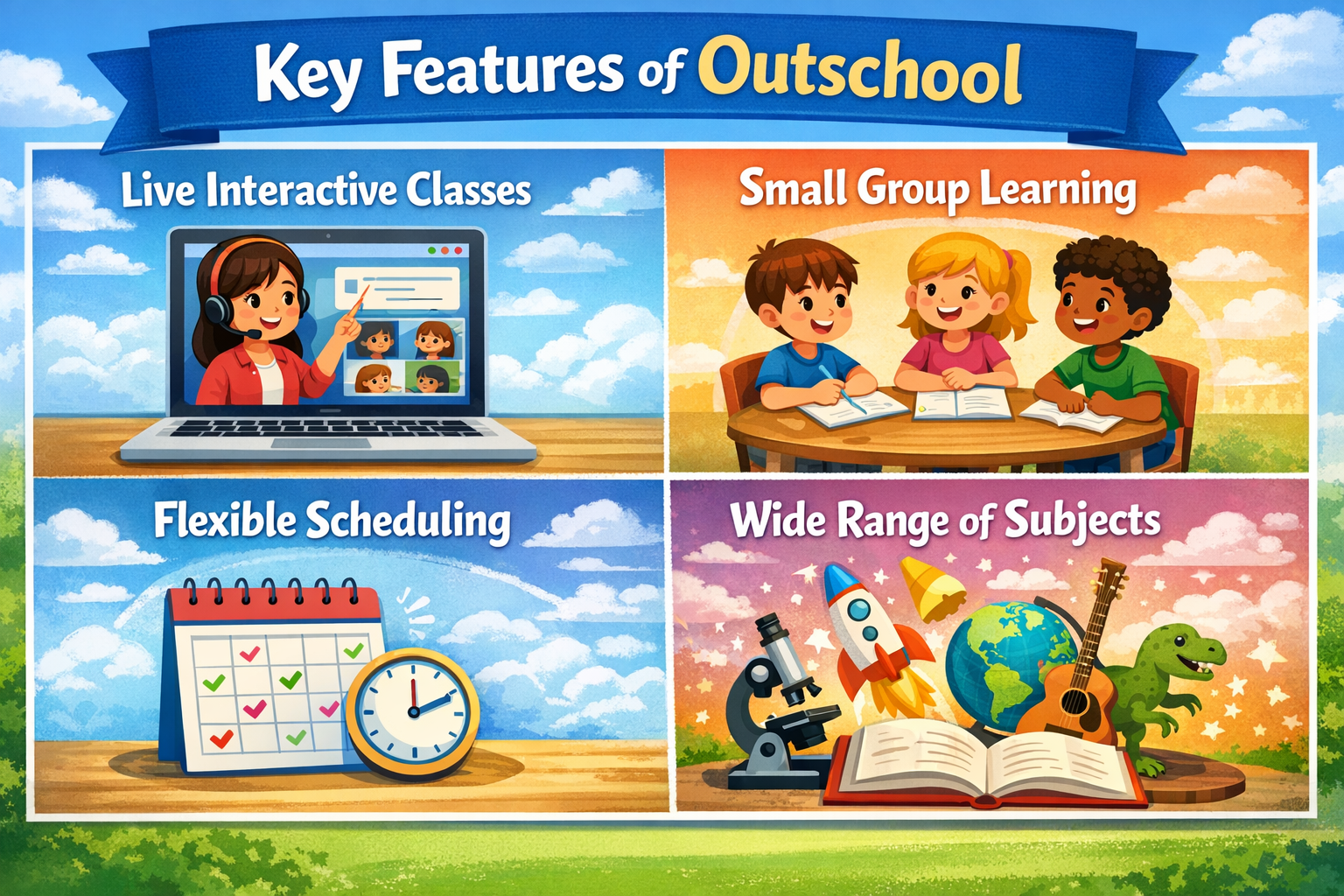
Key Features of Outschool
Live Interactive Classes
All classes are live. No pre-recorded boredom here. Students can ask questions, participate in discussions, and interact with teachers and peers in real time.
Small Group Learning
Most classes have small group sizes, which means more attention for each student. It’s like having a front-row seat every time.
Flexible Scheduling
Busy schedule? No problem. Outschool offers classes across time zones, making it easy for families to find something that fits.
Wide Range of Subjects
From algebra to animation, Shakespeare to space science—Outschool’s subject library is massive and constantly growing.
Subjects and Skills Taught on Outschool
Academic Subjects
Math, science, English, history, and test prep classes are widely available. Many follow US educational standards, making them ideal for academic support.
Creative and Artistic Skills
Art, music, acting, writing, and design classes help kids express themselves creatively. These classes often feel more like workshops than lessons.
Life Skills and Social Learning
Public speaking, financial literacy, critical thinking, and social clubs help students develop real-world skills.
STEM and Coding Focus
Coding, robotics, game development, and AI basics are among the most popular categories—perfect for future-ready learners.
Outschool for Homeschooling Families
For homeschoolers, Outschool is like adding a global classroom to your living room. It fills gaps, adds structure, and introduces kids to peers they might never meet otherwise.
Many families use Outschool as their primary learning platform, while others use it to complement a homeschool curriculum.
Outschool as a Supplement to Traditional School
Even kids attending regular schools benefit from Outschool. Think tutoring, enrichment, or exploring interests not offered at school. It’s like having an academic buffet after school hours.
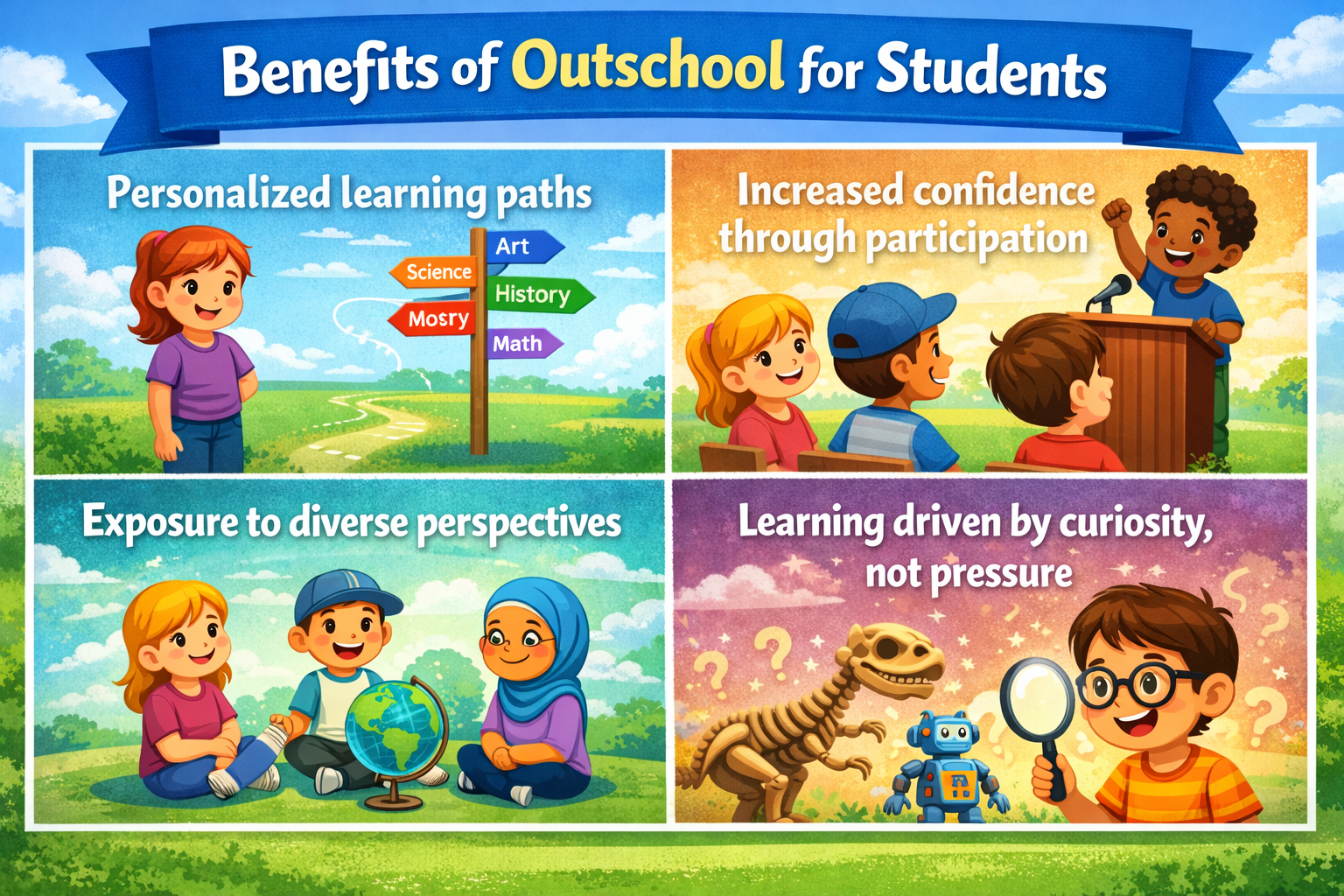
Benefits of Outschool for Students
- Personalized learning paths
- Increased confidence through participation
- Exposure to diverse perspectives
- Learning driven by curiosity, not pressure
When students enjoy learning, results naturally follow.
Benefits of Outschool for Parents
Parents get transparency, control, and flexibility. They can monitor progress, choose instructors, and adjust learning plans without bureaucracy.
Plus, no commuting. That alone feels like a win.
Benefits of Outschool for Teachers
Teachers earn independently, teach globally, and focus on what they love. No administrative overload, no rigid rules—just teaching with purpose.
Technology and Safety on Outschool
Online Classroom Tools
Classes use secure video conferencing, screen sharing, chat, and interactive tools to keep students engaged.
Child Safety and Privacy Measures
Outschool prioritizes child safety with background-checked teachers, monitored classrooms, and strict privacy policies aligned with US regulations.
Pricing Structure and Affordability
Prices vary by class, teacher, and duration. Some classes cost as little as $5, while others are premium multi-week courses. This flexibility allows families to learn within their budget.
Pros and Cons of Using Outschool
Pros
- Highly flexible
- Massive subject variety
- Live, engaging classes
- Global teacher pool
Cons
- Requires stable internet
- Costs can add up
- No standardized curriculum
Real-Life Examples: Outschool in Action
A 10-year-old learning Python from a software engineer. A shy teen gaining confidence through debate clubs. A homeschooler making friends across states. These stories are common on Outschool—and they show its real impact.
Future of Digital Learning with Outschool
As digital education evolves, Outschool is well-positioned to lead. With growing acceptance of online learning in the US, platforms like Outschool aren’t just alternatives—they’re the future.
Conclusion
Outschool is redefining what education looks like in the digital age. It’s flexible, engaging, and built around the learner—not the system. Whether you’re homeschooling, supplementing school, or simply exploring new interests, Outschool proves that learning can be both effective and enjoyable.
Frequently Asked Questions