Discover the ultimate guide to remote work success with practical strategies for productivity, communication, and work-life balance. This remote work handbook shares proven tips on building an effective remote workspace, managing time efficiently, collaborating with remote teams, and staying motivated while working from anywhere. Perfect for professionals and businesses looking to thrive in the modern remote work environment.
Understanding the Rise of Remote Work
The Global Shift Toward Remote and Hybrid Work
Remote work has transformed from a temporary pandemic solution into a long-term workplace revolution. A decade ago, working from home felt like a rare privilege reserved for freelancers or tech professionals. Today, it has become a mainstream way of working for millions of employees across the globe. According to recent workplace studies, remote work now represents a significant portion of the global workforce, with some reports estimating it has reached over 50% of workers in certain regions.
The shift accelerated dramatically during the COVID-19 pandemic when organizations were forced to adopt digital collaboration tools overnight. What surprised many leaders was that productivity didn’t collapse—if anything, it improved. Surveys show that 77% of remote employees report higher productivity when working offsite, demonstrating that remote work is not just convenient but often more efficient.
Hybrid work has also emerged as the dominant model. Studies suggest that around 52% of employees prefer a hybrid schedule that blends remote and office work. This balance allows employees to enjoy flexibility while still benefiting from face-to-face collaboration.
Think of remote work like a powerful new operating system for the global economy. It removes geographical limits, allowing companies to hire talent from anywhere and employees to design their workdays around productivity rather than commute schedules. Instead of spending hours in traffic or crowded trains, workers can redirect that energy into meaningful tasks and creative thinking.
Why Remote Work Is Here to Stay
Remote work is no longer an experiment—it’s a permanent feature of modern work culture. Organizations that once insisted on office-only policies are now embracing flexible work arrangements because they see the benefits in employee satisfaction and talent recruitment. Many companies have discovered that allowing remote options significantly increases their ability to attract skilled professionals.
One of the biggest reasons remote work continues to grow is time savings from eliminated commutes. Research shows that remote employees save about 72 minutes every day, and a large portion of that time is redirected toward productive work. Imagine gaining over an hour every day simply by not traveling to the office—this time can be used for deep work, exercise, learning, or family life.
Employees also value flexibility more than ever. Surveys reveal that over 81% of remote workers report improved work-life balance, which has become one of the strongest drivers of job satisfaction. Instead of forcing life to revolve around work schedules, remote work allows people to design schedules that support both productivity and personal well-being.
Businesses benefit as well. Lower office costs, access to global talent pools, and improved retention rates are just a few of the advantages. In fact, remote work often reduces employee turnover because workers appreciate the autonomy and flexibility it provides. When people feel trusted and empowered, they tend to stay longer and perform better.
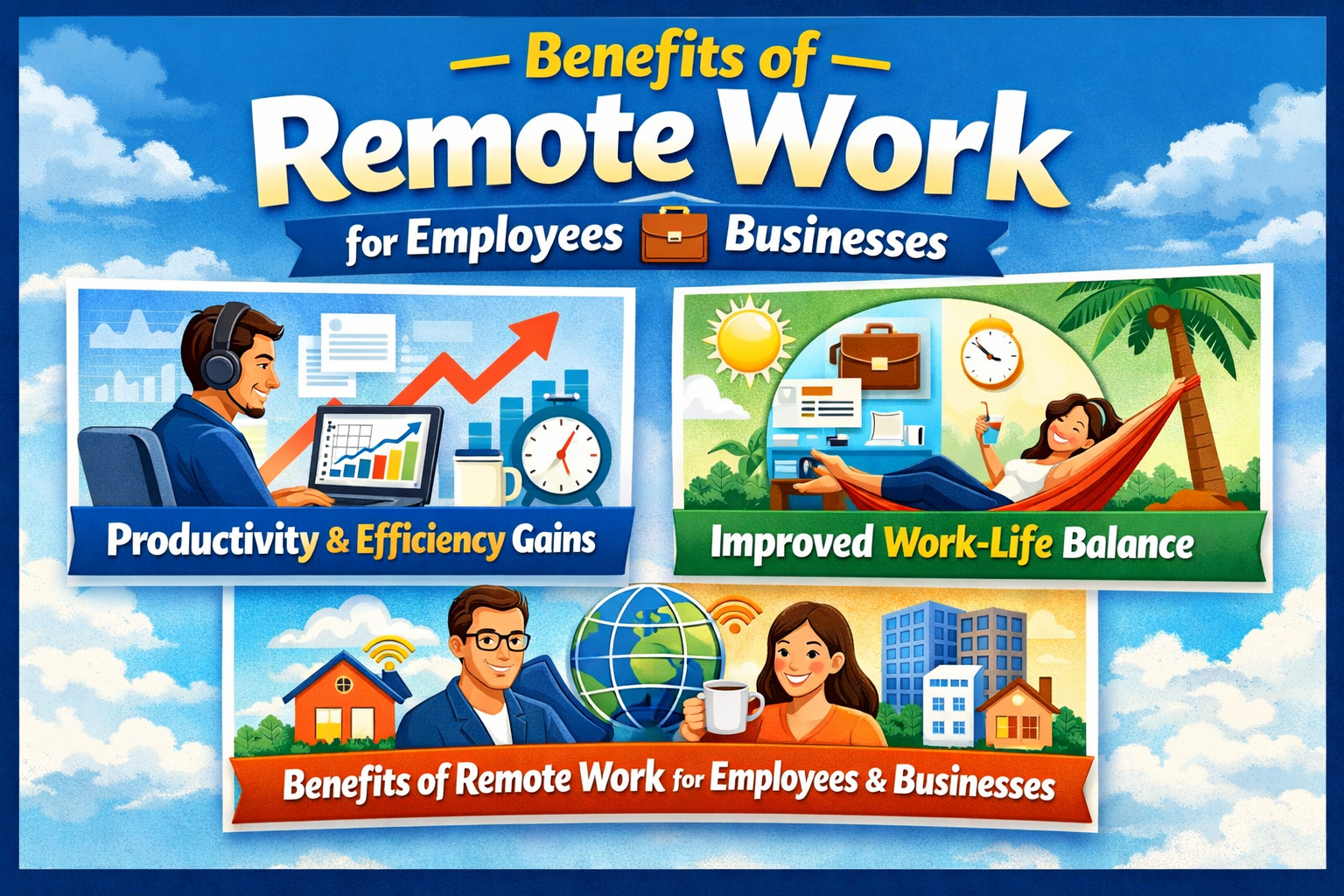
Benefits of Remote Work for Employees and Businesses
Productivity and Efficiency Gains
One of the most debated questions about remote work is whether it truly improves productivity. Early skeptics feared that employees working from home would become distracted or less disciplined. Yet data from multiple workplace studies tells a different story.
Research shows that remote workers can be up to 9% more productive than office-based employees in some settings. The reasons are surprisingly simple. Without constant office interruptions, spontaneous meetings, or noisy environments, workers can focus on deep tasks for longer periods. This type of uninterrupted concentration—often called “deep work”—is essential for solving complex problems or producing high-quality creative output.
Another productivity advantage comes from customized work environments. At home, people can design their workspace exactly how they like it—adjusting lighting, noise levels, temperature, and ergonomics to maximize comfort and focus. In contrast, office environments often force employees into one-size-fits-all settings that don’t work for everyone.
Remote work also encourages results-based performance instead of time-based performance. Instead of measuring success by how long someone sits at a desk, organizations focus on outcomes and deliverables. This shift toward accountability and trust often motivates employees to take ownership of their work and achieve higher levels of efficiency.
Improved Work-Life Balance
Perhaps the most celebrated benefit of remote work is its impact on work-life balance. Traditional office culture often blurs the line between professional obligations and personal well-being. Long commutes, rigid schedules, and office politics can make work feel overwhelming.
Remote work flips that dynamic by giving employees greater control over their schedules. Parents can manage school pickups, professionals can exercise during breaks, and individuals can organize their day around their most productive hours. For some people, early mornings are ideal for focused work, while others perform best later in the day. Remote work allows these natural rhythms to flourish.
The flexibility also improves mental health. When workers feel less pressured by commuting stress and office distractions, they experience lower burnout levels and higher job satisfaction. Surveys show that over 80% of remote workers say flexibility significantly improves their overall well-being.
From a company perspective, happier employees mean stronger engagement and better retention. Workers who feel balanced and supported are more likely to contribute innovative ideas and remain loyal to their organization. In a competitive talent market, this advantage can make a significant difference.
Common Challenges of Remote Work
Isolation and Communication Barriers
Despite its many advantages, remote work isn’t perfect. One of the biggest challenges employees face is social isolation. Working from home removes the daily interactions that naturally occur in offices—casual conversations, shared lunches, and spontaneous brainstorming sessions. Over time, the absence of these interactions can make people feel disconnected from their teams.
Studies have found that while remote workers often report higher productivity, they can also experience increased loneliness and emotional strain if communication is limited. This issue is especially common among new employees who haven’t yet built strong relationships within their organizations. Without informal interactions, building trust and collaboration may take longer.
Communication can also become more complicated in remote settings. Messages may be misunderstood without tone or body language, and delays in responses can slow down decision-making. Video meetings help bridge this gap, but excessive meetings can lead to fatigue and reduced productivity.
Successful remote teams address these challenges by prioritizing intentional communication. Regular check-ins, clear documentation, and collaborative tools help ensure that everyone remains aligned and connected. Instead of relying on spontaneous office conversations, remote teams must design communication processes that are structured and transparent.
Work-Life Boundary Problems
Another hidden challenge of remote work is the “always-on” culture it can create. When your office is only a few steps away from your bedroom or living room, it becomes difficult to separate professional responsibilities from personal life.
Many remote workers struggle to switch off after work hours because emails and messages continue to arrive throughout the evening. Without clear boundaries, the workday can slowly extend into nights and weekends. Over time, this constant connectivity can lead to burnout.
The solution lies in establishing clear routines and boundaries. Setting a specific start and end time for the workday helps create psychological separation between work and home life. Creating a dedicated workspace—even a small desk in a quiet corner—can also reinforce this boundary.
Think of it like turning on and off a light switch. When the workday begins, you step into your professional role. When it ends, you step away and return to personal life. This mental transition is essential for maintaining long-term productivity and well-being.
Setting Up the Perfect Remote Workspace
Essential Equipment for Remote Workers
A successful remote work setup begins with the right tools and equipment. While working from a couch with a laptop might seem appealing initially, it often leads to poor posture, distractions, and reduced productivity. A well-designed workspace can dramatically improve both comfort and efficiency.
Some of the most valuable tools for remote professionals include high-quality headphones, a second monitor, and a reliable internet connection. These tools make it easier to manage multiple tasks and participate in virtual meetings without interruptions. Research suggests that many successful remote workers rely on dual monitors and ergonomic accessories to maintain productivity.
Ergonomics also plays a crucial role. A comfortable chair, adjustable desk, and proper lighting reduce physical strain and prevent long-term health issues. Remote workers often spend extended hours at their desks, so investing in ergonomic furniture can significantly improve comfort and focus.
A good workspace doesn’t need to be expensive or elaborate. What matters most is creating a consistent environment that signals your brain it’s time to work. Over time, this association helps you enter a focused mindset more quickly and maintain productivity throughout the day.
Designing a Distraction-Free Environment
Even the best tools cannot compensate for a workspace filled with distractions. Remote workers often face interruptions from family members, household responsibilities, or digital notifications. Managing these distractions is essential for maintaining focus.
Start by identifying the most common sources of interruptions. Is it background noise? Social media notifications? Household chores that tempt you away from your desk? Once you understand the distractions, you can design strategies to minimize them.
Noise-canceling headphones, time-blocking techniques, and notification management can dramatically improve focus. Some remote professionals also use the Pomodoro technique, which involves working in focused 25-minute intervals followed by short breaks. This method helps maintain concentration while preventing mental fatigue.
A distraction-free workspace is like a personal productivity sanctuary. It protects your attention from constant interruptions and allows you to enter a state of deep work where creativity and efficiency flourish.
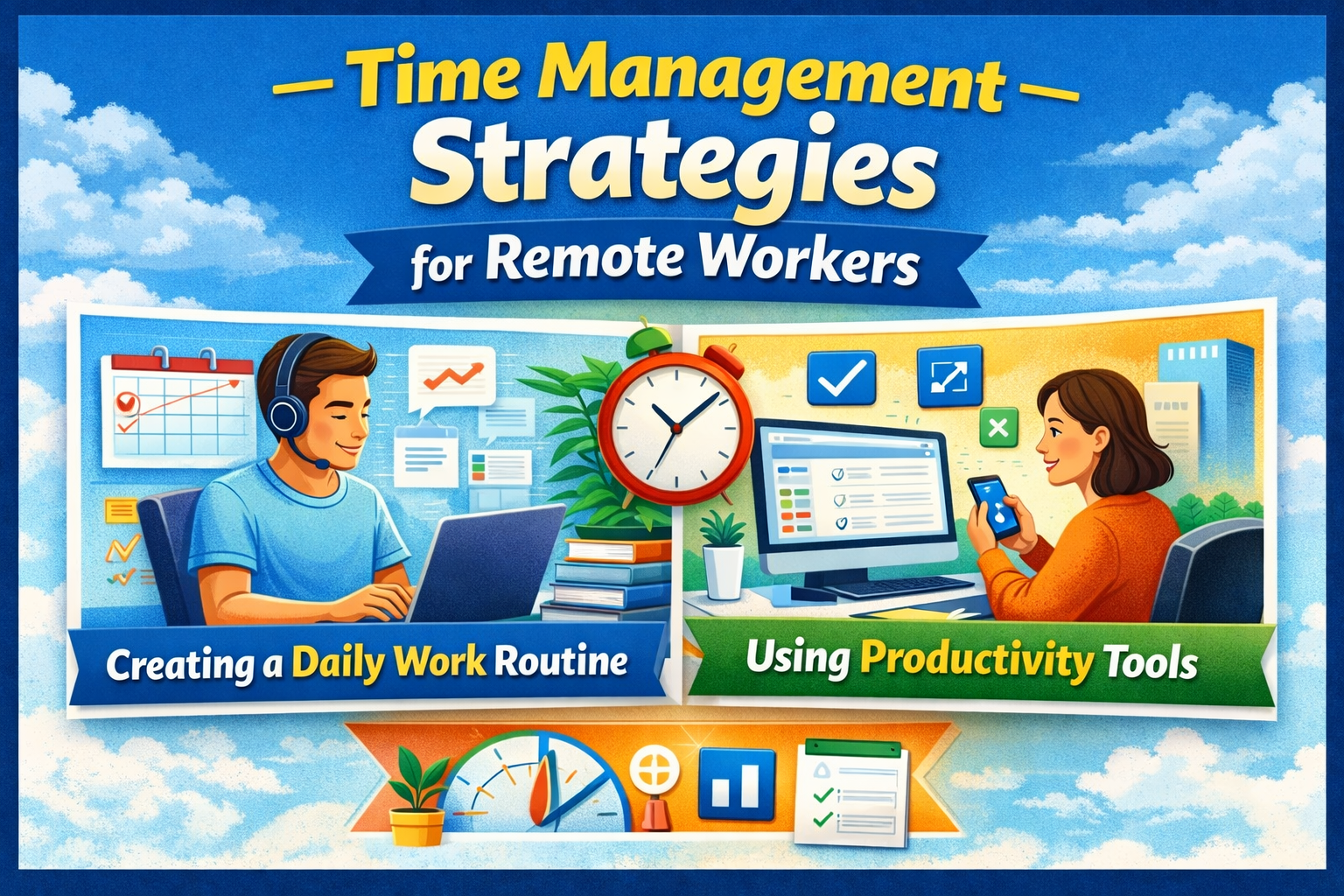
Time Management Strategies for Remote Workers
Creating a Daily Work Routine
Without a structured office schedule, remote workers must create their own routines to stay productive. The freedom of remote work can easily turn into chaos if you don’t establish clear habits and schedules. A well-structured daily routine acts as the backbone of successful remote work.
Start your day with a consistent morning ritual. This might include exercise, reading, or planning your priorities for the day. These habits signal to your brain that it’s time to transition into work mode. Many successful remote professionals treat their mornings as preparation for a productive day rather than immediately jumping into emails or meetings.
Next, define your most important tasks. Productivity experts often recommend focusing on three key goals each day instead of attempting to complete an overwhelming to-do list. By concentrating on high-impact tasks, you ensure that your workday delivers meaningful results.
Ending the day with a short review of accomplishments and next-day planning can also improve productivity. This practice helps you start the next morning with clarity and direction rather than confusion.
Using Productivity Tools Effectively
Technology is the backbone of remote work. The right tools can simplify collaboration, improve organization, and streamline communication across distributed teams.
Some of the most widely used productivity tools include project management platforms, communication apps, and time-tracking software. These tools help remote teams coordinate tasks, track progress, and maintain transparency across projects.
Here is a simple comparison of common remote work tools:
Tool Category | Purpose | Examples |
Communication | Team messaging and meetings | Slack, Microsoft Teams |
Project Management | Task tracking and workflow | Trello, Asana |
File Sharing | Document collaboration | Google Drive, Dropbox |
Time Management | Productivity tracking | RescueTime, Toggl |
Using these tools effectively requires discipline. Too many apps can create digital clutter and confusion. The goal is to choose tools that simplify workflows rather than complicate them.
Communication and Collaboration in Remote Teams
Choosing the Right Communication Channels
Remote teams rely heavily on digital communication, but not all messages should be delivered the same way. Choosing the appropriate communication channel can significantly improve clarity and efficiency.
For example, quick questions can often be handled through instant messaging platforms, while complex discussions may require video meetings. Written documentation is essential for sharing project updates and ensuring everyone has access to the same information.
Clear communication guidelines help remote teams avoid misunderstandings. Establishing expectations around response times, meeting schedules, and documentation practices ensures smoother collaboration. When everyone knows how and when to communicate, the team functions more efficiently.
Building Strong Team Relationships Remotely
One of the biggest misconceptions about remote work is that it eliminates team bonding. While it may reduce physical interactions, remote teams can still build strong relationships through intentional collaboration and communication.
Virtual coffee chats, team-building activities, and informal messaging channels can help recreate the social aspects of office culture. These interactions may seem small, but they play a crucial role in building trust and camaraderie among team members.
Leaders also play a vital role in fostering connection. Transparent communication, regular feedback, and recognition of achievements help remote employees feel valued and included. When teams feel connected and supported, remote collaboration becomes far more effective.
Maintaining Mental Health and Motivation
Preventing Burnout While Working From Home
Remote work offers flexibility, but it also requires discipline to maintain mental well-being. Without clear boundaries, work can slowly consume personal time and lead to exhaustion.
One effective strategy is scheduling regular breaks throughout the day. Short breaks improve focus, reduce stress, and help maintain energy levels. Physical activity—such as stretching or walking—can also refresh the mind and improve productivity.
Social interaction is equally important. Even if you work remotely, maintaining connections with colleagues, friends, and family helps prevent feelings of isolation. Many remote professionals schedule virtual catch-ups or coworking sessions to stay socially engaged.
Mental health should never be overlooked in remote work environments. Organizations that prioritize employee well-being—through flexible schedules, mental health resources, and supportive leadership—often see higher productivity and stronger team engagement.
Future Trends in Remote Work
The Growth of Hybrid Work Models
The future of work is unlikely to be fully remote or fully office-based. Instead, the hybrid model is emerging as the most sustainable solution for many organizations. Hybrid work combines the flexibility of remote work with the collaboration benefits of in-person meetings.
Studies indicate that hybrid teams can be slightly more productive than both fully remote and fully office-based teams because they balance autonomy with social interaction. This approach also allows companies to maintain office culture while giving employees the flexibility they desire.
As technology continues to evolve, remote collaboration tools will become even more sophisticated. Virtual reality meetings, AI-driven productivity tools, and global hiring platforms may reshape how teams interact and collaborate across continents.
Remote work has already changed the workplace forever. The organizations that adapt to this new reality—by embracing flexibility, trust, and digital collaboration—will be best positioned to thrive in the future.
Conclusion
Remote work is more than a trend—it’s a transformation of how the world approaches productivity, collaboration, and work-life balance. The ability to work from anywhere has opened new opportunities for employees and businesses alike, creating a more flexible and inclusive global workforce.
Success in remote work depends on more than just having a laptop and internet connection. It requires intentional habits, effective communication, strong time management, and a supportive work environment. By creating structured routines, investing in the right tools, and maintaining healthy boundaries, remote workers can achieve remarkable levels of productivity and satisfaction.
The ultimate remote work handbook isn’t about rigid rules—it’s about building a system that works for you. When individuals and organizations embrace flexibility, trust, and continuous improvement, remote work becomes not just sustainable but transformative.
Frequently Asked Questions