Discover how to maximize your gaming performance with the ultimate Melee Dose strategy. This guide explores melee combat mechanics, advanced techniques, gaming setups, and expert tips to help players dominate close-range battles and enhance their overall gaming experience.
Understanding the Concept of Melee Dose in Gaming
Gaming has evolved dramatically over the last two decades, but one element continues to captivate players across genres: melee combat. Whether you’re swinging a sword, throwing punches, or engaging in intense close-quarters battles, melee gameplay delivers a raw, adrenaline-filled experience that ranged combat often struggles to replicate. The phrase “Melee Dose” refers to immersing yourself deeply in close-range combat mechanics, maximizing the thrill, skill, and strategy that melee gameplay offers.
Unlike long-range weapons such as guns or bows, melee combat forces players to get up close and personal with their opponents. That proximity creates a different level of tension and excitement. Every movement matters—timing, positioning, reflexes, and even psychological anticipation of your opponent’s next move. Victory or defeat might be decided in a split second.
Many modern games integrate melee mechanics into broader combat systems to make gameplay more dynamic. In some shooters, for example, melee attacks serve as powerful finishing moves. The game Doom (2016) uses “glory kills,” allowing players to perform close-range finishing attacks on weakened enemies to regain health and maintain momentum during combat.
The popularity of melee systems stems from their physicality and immediacy. When you land a perfectly timed strike or counterattack, it feels incredibly satisfying. That feeling is what gamers often describe as getting their “melee dose”—a surge of excitement from mastering close-combat mechanics.
Understanding this concept is the first step toward maximizing your gaming experience. Once you recognize the elements that make melee combat engaging, you can refine your skills, optimize your setup, and fully embrace the thrill of close-quarters gaming.
What Does “Melee” Mean in Video Games?
The term melee originally comes from a French word meaning a chaotic hand-to-hand battle. Historically, it referred to close combat among several fighters without clear formation or structure. In video games, the concept has been adapted to describe close-range combat involving physical weapons or hand-to-hand fighting.
Unlike ranged combat, melee attacks typically require players to be within a short distance of their opponents. This limitation forces players to develop precision movement, spatial awareness, and tactical timing. Instead of relying on aim from afar, melee combat emphasizes reading your opponent and predicting their behavior.
One classic example of melee-focused gameplay is Super Smash Bros. Melee, a fighting game where characters battle on stages and attempt to knock opponents out of bounds rather than depleting a health bar. The game highlights how melee systems can create highly competitive environments where skill and reaction time matter more than raw firepower.
In modern gaming, melee mechanics appear across multiple genres:
- Fighting games
- Action RPGs
- First-person shooters
- Survival games
- Multiplayer battle arenas
Each genre adapts melee combat differently, but the core idea remains the same: close-quarters engagement where precision and timing are everything.
Because melee combat often requires greater skill and risk than ranged combat, it tends to feel more rewarding. Landing a perfect parry or counterattack is not just satisfying—it’s proof that you’ve mastered the mechanics of the game.
The Evolution of Melee Combat Systems
Melee combat has come a long way since the early days of gaming. Early titles relied on simple attack animations and limited interaction, but modern games now feature complex physics systems, advanced animations, and sophisticated hit detection.
In early arcade and console games, melee attacks were often basic button presses with little variation. Players could attack, jump, or block, but the mechanics lacked depth. Over time, developers began introducing combo systems, directional attacks, and stamina mechanics, making melee combat far more strategic.
Today’s games often incorporate:
- Motion-captured animations
- Advanced collision detection
- Stamina and endurance systems
- Contextual finishing moves
- Environmental interactions
These improvements make melee combat feel more realistic and immersive. Players must consider factors like stamina management, weapon weight, and attack recovery time.
Another major advancement is combat flow design. Modern developers carefully balance speed, damage, and defensive mechanics to create fluid combat systems. This balance ensures that melee combat feels both challenging and fair.
As gaming technology continues to evolve, melee systems are becoming even more immersive. With innovations like virtual reality and haptic feedback, players can physically feel the impact of their attacks, bringing melee combat closer to real-world experience than ever before.
Why Melee-Based Gameplay Is So Addictive
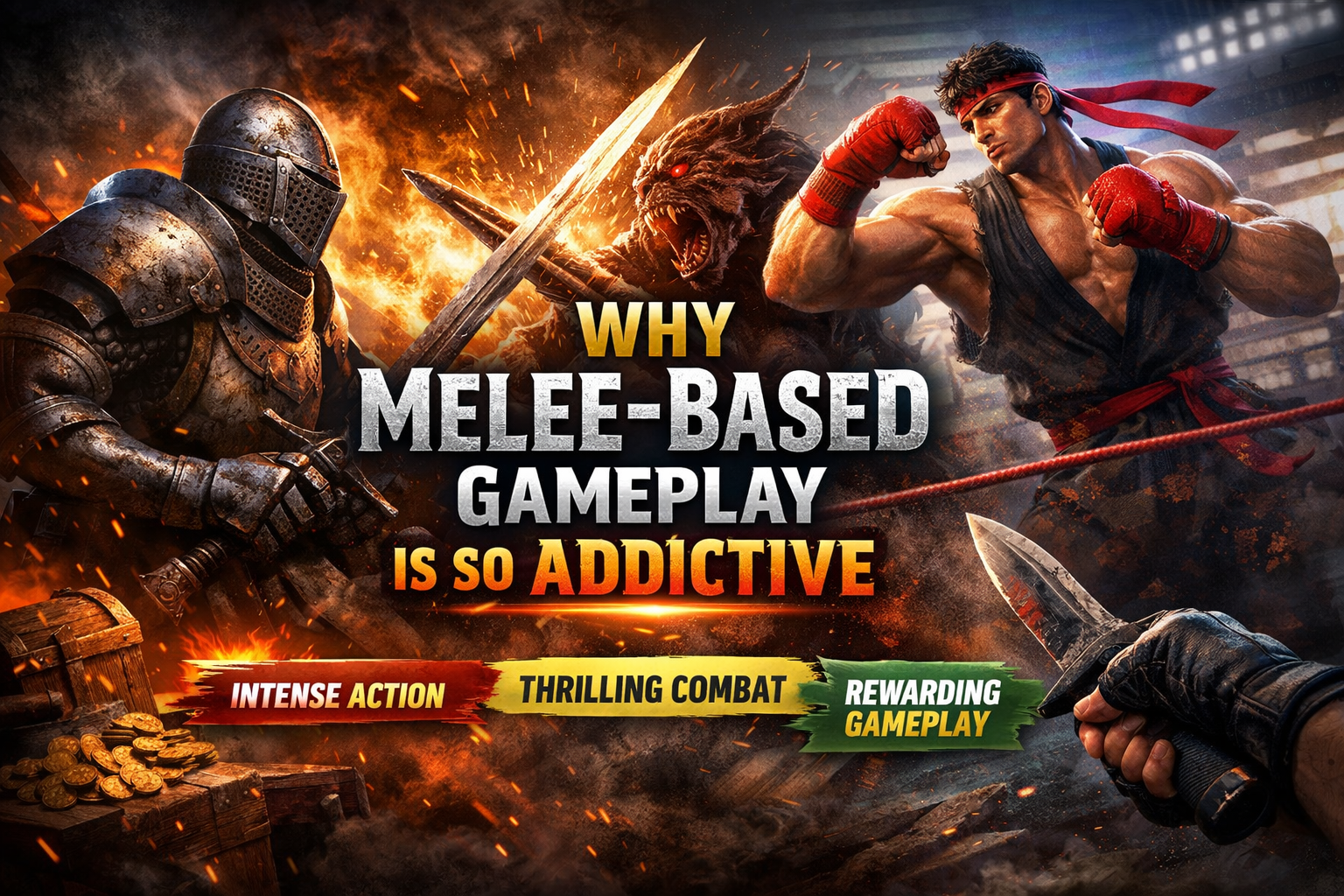
If you’ve ever played a game where melee combat felt incredibly satisfying, you already know the answer: it’s intensely engaging. Unlike ranged combat, melee gameplay keeps players constantly on edge. Every encounter becomes a mini duel where reaction speed, positioning, and strategy all come into play.
One of the biggest reasons melee gameplay is addictive is the high level of player agency. You’re not just aiming and shooting—you’re actively maneuvering, dodging attacks, and choosing the exact moment to strike.
This creates a rhythm similar to a dance. Attack, defend, counterattack, reposition, repeat. Each action influences the next, creating a dynamic loop that keeps players engaged.
Another factor is instant feedback. When you land a melee hit, you often see dramatic animations, sound effects, and visual cues. These signals tell your brain that you’ve done something impactful.
Psychologically, this triggers the brain’s reward system. Each successful strike releases a small burst of satisfaction, encouraging players to keep going.
It’s no surprise that melee combat remains a core element in many of the most popular games. From fantasy RPGs to competitive fighting games, close-quarters combat delivers an experience that feels personal, intense, and incredibly fun.
Key Components of an Effective Melee Gaming Strategy
Mastering melee combat isn’t just about swinging your weapon wildly. Successful players understand that effective melee gameplay requires strategy, timing, and situational awareness.
First, you need to understand your weapon’s characteristics. Different melee weapons have different strengths. Some are fast but deal less damage, while others hit harder but take longer to swing.
Second, you must manage your positioning. Standing in the wrong spot can leave you vulnerable to enemy attacks.
Finally, timing is everything. Attacking too early or too late can leave you open to counterattacks.
Professional gamers often treat melee combat like a chess match. Each move is calculated, and every mistake can be exploited by the opponent.
Weapon Choice and Loadout Optimization
Choosing the right melee weapon can dramatically change your gameplay style. A heavy weapon like a hammer might deal massive damage but leave you vulnerable if you miss. A lighter weapon such as a dagger may deal less damage but allow rapid attacks.
When optimizing your loadout, consider the following factors:
- Attack speed
- Damage output
- Range
- Recovery time
- Special abilities
Balancing these factors helps you find a weapon that suits your playstyle.
Speed vs Damage Trade-offs
Every melee weapon sits somewhere on the spectrum between speed and power. Fast weapons allow rapid attacks and quick combos, while heavy weapons deliver devastating single blows.
Players must decide which approach suits them best. Aggressive players often prefer speed, while strategic players might prefer power.
Range and Hitbox Considerations
Range determines how far your weapon can reach. Weapons with longer reach allow safer attacks but may be slower. Hitboxes also affect accuracy, determining whether your attack connects with the target.
Understanding these mechanics can dramatically improve your combat efficiency.
Mastering Timing and Movement
Movement is arguably the most important skill in melee combat. Even the most powerful weapon becomes useless if you can’t position yourself correctly.
Good players constantly move around their opponents, forcing them to react. This movement creates opportunities for attacks and prevents enemies from landing hits.
Dodging, blocking, and counterattacking are core defensive techniques. Learning when to use each one can dramatically increase your survival rate.
Positioning also matters. Fighting near walls or obstacles can limit your movement and put you at a disadvantage.
Players who master movement often dominate melee battles because they control the pace of combat.
Popular Games That Showcase Exceptional Melee Mechanics
Many games have become legendary because of their melee combat systems. Fighting games, for example, rely almost entirely on close-range combat mechanics.
Super Smash Bros. Melee is widely considered one of the most competitive fighting games ever made, featuring fast gameplay and precise mechanics that reward skill and timing.
Action RPGs like Dark Souls also emphasize melee combat, requiring players to carefully time their attacks and manage stamina.
Even shooters sometimes incorporate melee elements to add depth. Games like Doom encourage aggressive close-range combat by rewarding players who engage enemies up close.
These games prove that melee combat can be just as exciting—if not more so—than traditional ranged gameplay.
Hardware and Setup for the Ultimate Melee Dose Experience
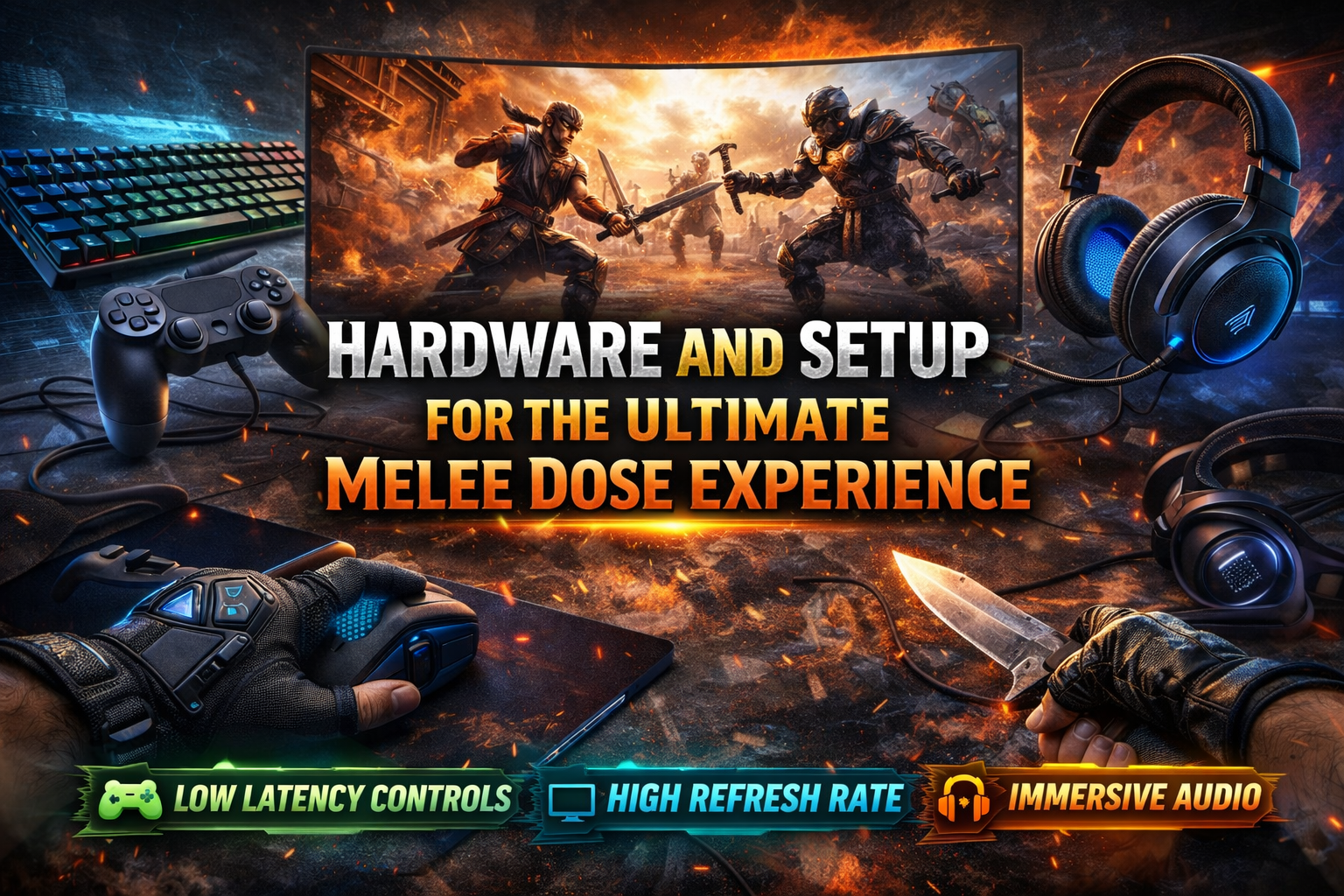
Your gaming setup plays a surprisingly important role in melee performance. Because melee combat relies heavily on timing and reaction speed, hardware quality can make a noticeable difference.
High refresh-rate monitors reduce input lag, allowing players to react more quickly. Low-latency controllers can also improve responsiveness.
Audio matters as well. Many games provide subtle sound cues that signal incoming attacks. Good headphones can help you detect these cues more easily.
The right setup doesn’t just improve performance—it enhances immersion. When your hardware works seamlessly with the game, the experience becomes far more enjoyable.
Advanced Techniques Used by Professional Players
Professional gamers often use advanced techniques that casual players may overlook. These include animation canceling, frame-perfect attacks, and predictive movement.
Animation canceling allows players to interrupt attack animations, enabling faster combos. Frame-perfect attacks involve executing actions within extremely precise timing windows.
Predictive movement is another key skill. Instead of reacting to an opponent’s actions, experienced players anticipate them and prepare counters in advance.
These techniques require practice, but mastering them can dramatically improve your performance.
Future of Melee Gameplay in Modern Gaming
The future of melee combat in gaming looks incredibly promising. Developers continue to experiment with new mechanics and technologies to make combat more immersive.
Virtual reality is already transforming melee gameplay. Instead of pressing buttons, players physically swing their arms to attack enemies.
Artificial intelligence is also improving enemy behavior, making melee encounters more challenging and unpredictable.
As gaming technology advances, melee combat will likely become even more realistic, strategic, and satisfying.
Conclusion
Melee combat remains one of the most exciting aspects of gaming. Its combination of precision, timing, and adrenaline-filled action creates an experience that keeps players coming back for more. Whether you’re battling opponents in a competitive arena or exploring fantasy worlds with a sword in hand, mastering melee gameplay can dramatically enhance your gaming experience.
By understanding weapon mechanics, refining your movement, optimizing your setup, and studying advanced techniques, you can take your “Melee Dose” to the next level. The beauty of melee combat lies in its simplicity—two players, one battlefield, and skill deciding the outcome.
The more you practice and experiment with strategies, the more satisfying melee gameplay becomes.
Frequently Asked Questions